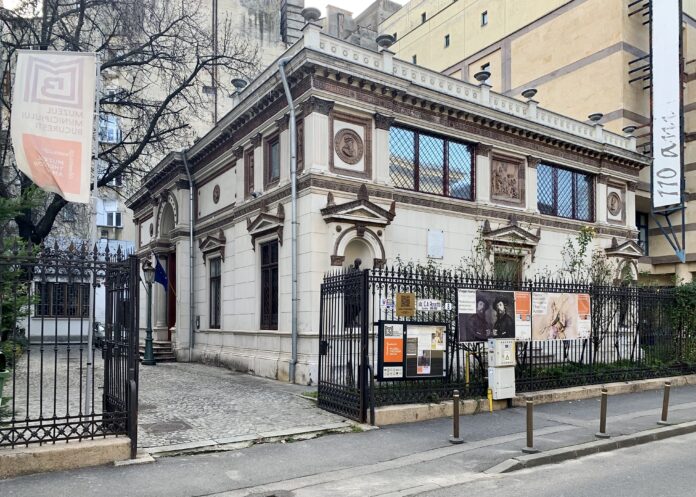
1. Theodor Aman Museum
Description: Hidden in the heart of Bucharest (8 C. A. Rosetti Street, near University Square), Theodor Aman Museum is a discrete cultural gem: it is located right in the house-ateli-atel built by the painter Theodor Aman (1831- 1891), one of the founders of modern Romanian painting. It is also one of the oldest memorial museums in the country, opened in 1908. The eclectic building with neoclassical influences and neoRenaissance decorations was designed by Aman himself with sculptor Karl Storck, resulting in a spectacular home-workshop for the epoch and very intimate atmosphere. Visitors enter practically in the artist’s personal universe: the interior of the house is kept almost exactly as in the 19th century, with original furniture, personal items and – especially – The works of Aman Exposed right on the walls that he once hung. The museum comprises two levels: the lobby and the living room on the ground floor, and the large workshops on the floor (one for painting, with skylight, another for engraving) and the bedroom. More than 100 original works can be admired on walls and eagles: oil paintings (including famous paintings) “Ateliers of the artist”Your emails “Battle of the White Valley”Your emails “Hora de la Aninoasa”), rare engravings made by Aman, drawings in pencil, and sculptures made by him. Each room has a ceiling adorned with allegorical murals (performed by Aman), representing Music, Painting, Sculpture – a statement of the artist’s devotion to the arts. The furniture and decorations are original, from the painter’s easel and palette to his engraving instruments, the frames he carved in wood and the display windows with medals and decorations. The entire house emanates the perfume Belle Époque of Bucharest and the creative spirit of the painter – it is one of the few workshop houses in Europe that have preserved its authenticity.
Why is it special: Theodor Aman Museum offers a personal and emotional experience – his visit is more like a visit to someone’s house than a classic museum. You are in the privacy of the space where the artist lived and created for more than 20 years; you see not only his works, but also the piano where his wife sang, the papetry, the collection of popular costumes that inspired him, and even his paint tubes. It’s a direct way of connecting with Aman’s personality and his era – as critics wrote, “every detail of the painter’s house reflects his artistic vision and taste of the age”. A visit to this museum is all the more valuable as Aman himself is an important figure: First Director of the School of Belle- Arts in Bucharest, author of historical and gender-defining compositions for national art. In addition, the house, as an architectural monument, is itself superb – stained glass, sculpted lambrices, mosaics on the floors confer an ambience of another century. The museum is small (only a few rooms), so it visits easily in half an hour, but The impression left is deep: Many visitors come out expressing the pleasant surprise that such a place exists in the middle of the city and regret that it is not more known. Theodor Aman played a significant role in Romanian culture, and his museum rises to its height.
Visitors experience: Those who discovered the Aman Museum have only words of praise: “The experience of visiting this museum is all the more personal as the painter himself created the plans of the house… Housing is considered one of the most beautiful in Bucharest”. Basically, almost any review mentions architectural beauty of the house and feeling time travel that gives you. Foreign tourists compare it to other houses of artists in Europe (e.g. Delacroix’s house in Paris) and say that Aman exceeded their expectations. The guide (if a guided tour is required) is highly appreciated – museums know the life of the painter and passionately tell anecdotes about how Aman organized musical evenings at his home, how he received his friends’ visit (e.g. writer B.P. Hashdeu) or how he even painted his own portrait on the ceiling (representing Paintingwith his face). A detail loved by visitors: peace and privacy – being a less known museum, often you are alone or with very few others in the halls, which allows you to contemplate the works and the decor in safety, without agitation. Many declare themselves excited by the museum yard – small garden with the statue of Aman, a green and quiet corner away from the forfely boulevards. The fact that this museum has escaped untouched by vicissitudes (monument building saved from demolition in communism due to protected murals) is considered a miracle and a gift. A local visitor wrote: “The Aman Museum is like a little magic brick in the city’s history wall – you press it and suddenly you’re in 1880 “.
Useful information: The Aman Museum is open from Wednesday to Sunday, 10: 00 to 5: 30. The ticket is very accessible: 15 lei adults, 4 lei students / pensioners, 2 lei students. Basically, at the price of a coffee you enter a heritage world. The Romanian Guide is free on request (if the staff is available), in English it is good to call ahead for programming. Photography without blitz is allowed. Due to the limited space, groups of more than 10 persons should be announced (to ensure that the rooms do not get too crowded). The museum has a small shop where there are some reproductions of Aman, books and souvenirs – being a small museum, it’s not very extensive, but you can buy for example a set of views with its paintings at 10-15 lei. The location is ultra-central, 5 minutes on foot from the University, so it’s easy to include in a walk on the Victory Way.
Quote from a recent review: “A small but rare beauty museum. The House of Aman charmed me: every corner is decorated by the artist’s hand. I thought I saw Aman working at the workshop easel… and then going down the ladder to the salon, to welcome his guests. A special experience in Bucharest, which I recommend to anyone who loves art and history”. Such impressions confirm that Theodor Aman MuseumAlthough less well known, it offers visitors a particularly intimate meeting with art and the past, qualifying them as one of the capital’s most valuable niche museums.
Official link: Museum of Bucharest .ro / museum-th.-aman (dedicated page, information).
2. The Fragrance Museum (“Little Paris” Museum)
Description: A small and unconventional museum dedicated art of perfumery and its history in Romania, known as Perfumed Museum or “Little Paris” Museum. Opened in 2014 by the passionate and collector Val Jacob, this private museum is hidden inside a luxury perfumery (Mario Plaza, Dorobanti Way 172). With almost 10,000 pieces, it’s a unique place in the country, bringing together Famous perfumes, vintage bottles, vintage cosmetics and beauty related objects. The exhibition space, although not very large, is densely arranged as an olfactory curiosities cabinet: on shelves and windows you will see from elegant Murano crystal bottles, to interwar powder boxes, perfumery commercials from old Romanian magazines like “Farmec” or “Miraj” from the years of communism. The guide will carry you in Time travel through the perfumed universe of Little Paris Bucharest: you will learn about the famous perfumery of the Victoria Way of the 1930s, about the mundane ladies and the essences they preferred. The collection includes extremely rare specimens: for example, a bottle of “Eau de Cologne No. 1” produced in Brașov in 1815 (among the first known Romanian perfumes), luxury perfumes used by the boyar families in the 19th century, or even essences worn by Queen Maria. The pride of the museum are the legendary perfumes of the great houses: from an original bottle of “Double Bourbon” of Houbigant (Carol I’s favorite) at “Mon Boudoir” – purple perfume created by Jean Houbigant for Queen Mary, at authentic vials of Chanel No. 5 The ’50s. One of the most valuable pieces is a tiny 1825 bottle of perfume. “Josephine” created for Napoleon’s wife, in original!. Also presented are famous men’s perfumes (e.g. “Carpathian” created especially for King Carol II) and popular cosmetics from communist periods (Chinese lipstick, “May 1” odicolone, etc.) – which nostalgia visitors. What makes the experience special: The guide is provided by the collector himselfwho passionately shares the story of each perfume, often letting you smell some rare essences well preserved. The museum is not an official state, but a private initiative, but that makes it all the more charming – it’s like being invited into the living room of an eccentric connoisseur who shows you his perfumed treasures.
Why is it special: The Fragrance Museum is certainly a unique place in Bucharest’s cultural landscapecombining history with glamour and sensory curiosity. For anyone who is passionate about perfumes, fashion or the daily life of past ages, visiting is a delight – basically, not just seeing objects, but discover flavors defining periods and personalities. There’s a small niche museum But it touches many aspects: the history of perfumery businesses (the interwar Bucharest was full of boutiques with essence from Paris, which is why they called it Little Paris), social history (the perfume as a class indicator and elegance) and even the history of design (Art Deco bottles, retro graphics boxes are exhibited by outstanding design). The fact that the initiative belongs to a passionate collector is felt: the visit is personalized, Each exhibit has a story about how it was found or who used it. The museum is also ambitious by comparing local to international: its collection has been compared with perfume museums in Barcelona or Paris, and connoisseurs appreciate the rarity of some of the pieces. Basically, in a capital where such a subject may seem marginal, the Perfumed Museum fills a void and connects Bucharest from then to now through its fragrance. It’s also an example of urban micromuseumThe kind of hidden, alternatively, place that passionate tourists seek beyond major attractions.
Visitors experience: Visitors’ reviews are enthusiastic and often surprised: “Open in 2014 in Mario Plaza, the museum represents a private collection of perfumes and cosmetics… a unique place in Romania with almost 10,000 exhibits”. Those who were there tell us that they had some an exciting lesson: they smelled Marilyn Monroe’s favorite perfume (the famous Chanel No.5) from an old original bottle, they found out how the fragrance was made of natural essence, they saw bottles inlaid with jewels, they held in their hand a “Mennu” bottle specially designed for Ceaușescu (his favorite perfume, made in Miraj). Often visitors praise Collector’s ambition: The fact that one man has gathered so many objects (many recovered from old houses, fairs, donations) and now shares them with the public for free (the museum does not charge a visit fee). The atmosphere is relaxed and full of discussion – basically, the guide makes you travel mentally to the Royal Court, into the boudoir of Queen Mary, then to the interwar desert, then to the latter years with the antiseptic “Farmec” spray. Many visitors (but also male visitors) feel inspired to explore the art of perfumery after the visit. Of course, some mention that space is narrow and visits quickly (20-30 min), but the content is dense. A lot of people didn’t know about it before – so the reaction is Discovery of a well-kept secret of the city.
Useful information: The Perfumed Museum being in a commercial space, access is made through the perfumery with which it is associated. The entrance is freebut visit on a pre-scheduled basis (you must contact Facebook / phone to set an hour – the collector ensures he is present as a guide). The address is the Dorobanti Way 172, on the 1st floor of Mario Plaza – a shopping building. Programming can also be done adhoc if you’re lucky and Mr. James is there. Typical shift takes 20-30 minutes, but discussions can spread as desired. As a private space, there is no specific souvenir shop, but you can buy modern artisanal perfumes from the host perfumery if you want (no obligation). It is not recommended to go in groups larger than 5-6 without notice, the space being small. It’s occasionally included in alternative tourist circuits of the city, so it enjoys recognition.
Quote from a recent review: “A unique place! The collection of perfumes has effectively left me amazed – so many wonderful bottles, each with its history. The guide was exceptional: it did not travel through the perfumery of Bucharest of old and did not let us smell old essences for decades. I never thought I’d feel Queen Mary’s favorite perfume or see lipstick tubes from 80 years ago. The Museum of Perfumes is a little treasure hidden for any passionate about beauty and history.”. Such impressions confirm the status of the Perfumed Museum as cultural delicacy of Bucharest, a place less well known, but which offers a memorable and sensory experience, completely different from that of classical museums.
Official link: Facebook page – Val Jacob Frame Museum (for contact and appointments).
3. The Little Paris Museum (Memorial House “The Little Paris Museum”)
Description: Located right in the heart of the Old Center (Lipscani no. 41), Little Paris Museum is a private museum that recreates the atmosphere of a Bucharest bourgeois house from the late 19th century to the early 20th century. Inaugurated in 2017, the museum presents itself as “a place with ambience, seduction, beauty and interpretation”providing visitors an immersive incursion into a vintage residence. Hosted in an old building, the museum is arranged as an elegant apartment-coupe: Eastern and French decorated salons, a photo-cabinet room, a boudoir with vintage clothing, all furnished and accessories with authentic parts from the period when Bucharest was called “Little Paris” (1880-1940). Basically, walking in there you wake up through Biedermeier furniture, Venetian mirrors, pianos, fine china, paintings and sepia photographs – everything extremely well preserved and arranged so that you get the feeling that the owners just got out of the rooms a little bit. Over 1000 exhibits are carefully integrated in the decoration: from dresses with train, corsets, jobens and jewels, to sets of silver tea, journals, scented letters, or even a functional gramophone. The game of lights (light-filtering blinds, vintage lamps) and discrete soundtrack (interwar jazz or romance) increase the effect of “time capsule.” The museum offers and interactive experiences: visitors can (for extra cost) dress up in vintage clothes to take pictures in decor, can book a tea served in the museum salons of fine china, or even private romantic dinners (based on programming, in the French-style hall). Thus, the Little Paris Museum is not only to be seen, but also to be lived – it is thought of as a coqueted refuge from the present, where you can enjoy an hour of belle époque with all your senses.
Why is it special: This museum is special through its concept of “living museum” – does not expose objects in sterile windows, but integrates them into a complete environment, giving them life and context. It’s, in a way, vintage scenography where the visitor plays the guest of the time. An appropriate characterization comes from even a presentation material: “Presented as a place with ambience, seduction, beauty and interpretation, the museum at the heart of the Historical Centre is an incursion into an old bourgeois house. Extremely well-presented and preserved, the exhibits give the feeling that you’re stepping right into the past for a few minutes or hours.”. Indeed, the objects – over a thousand – are restored and presented impeccably from Silk dresses in windows (some belonged to famous aristocrats), at Oriental furniture inherited by the boyars left at StambulAll telling a silent story. For vintage fashion enthusiasts, it is a delight: the collection of clothing and accessories is extensive (headgear, sequins, ostrich feather fans, etc.). For urban history enthusiasts, it’s the same: I can see what a real bourgeois interior looked like, not just in pictures. Compared to other memorial houses, the Little Paris Museum is not dedicated to a particular person, so it has the freedom to illustrate several human types – such as an Oriental salon versus a Parisian one – thus providing a panoramic view of the lifestyle of the former Bucharest elites. It is the kind of cultural objective that makes visiting museums a relaxing experience, close to entertainment – a aspect reflected by complementary options (costumes, tea, who). It’s, in a word, a seductive museum, especially for the young audience, for couples, for those looking for something other than traditional museums.
Visitors experience: Those who arrived at the Little Paris Museum usually declare themselves enchanted, some admitting that “they didn’t know what to expect, but it was way above expectations.”. Reviews highlight authenticity: “Exhibits give the feeling of stepping right into the past”. Visitors often mention how well objects are preserved and how well harmonious are willing. Many praise the courageous initiative to open such a fixed place in the center of modern entertainment (Old Centre full of bars), creating an auspicious contrast – some even say it was “quiet and elegant oasis in the afternoon after visiting Stavropoleos Church and before going to a pub”. Interactive experiences also receive excellent notes: those who have tried photo session dressed say it was extremely fun and professional – staff help choose the right outfits and stage. Those who attended tea ceremonies appreciates attention to detail (vintage pastry, teapot vintage, etc.). Basically, it is confirmed that the Little Paris Museum is not just to be visited, but to be felt. One mention: the space has two large rooms + two smaller, so it’s not very large, the standard visit (without extra experiences) takes ~ 30-40 min. But the way it’s organized makes visitors enjoy that time intensely, even come back with friends. It’s a romantic place by the way – many couples go together, some even organized surprise engagements in the setting (there are nervous reviews about it). As a minor minus: being private, the ticket is something more expensive than state museums, but people think it’s worth it.
Useful information: The Little Paris Museum is open daily, usually in the second part of the day (14: 00 – 22: 00, adapted to the flow of the Old Center). The entry ticket is 40 lei / person for visiting the exhibition, and the extra packages (photo costumes, tea, etc.) have separate prices (e.g. photo shoot ~ 150 lei, afternoon tea ~ 80 lei / person). Programming for extra experiences or groups is recommended. Unblemished photography is allowed. The address is on Lipscani 41, right next to the Latin passage – very central, accessible at any time, so a perfect cultural pit stop between visiting the targets in the area. Have and a small shop on the way out, with epoch-related souvenirs: books on interwar fashion, reconditioned vintage jewelry, vinyl and vintage decorations for sale.
Quote from a recent review: “Little Paris Museum was like a dream. I came out of the Old Center commotion into a world of prom and perfume. Salons are of rare elegance, exhibits – dresses, hats, furniture – make you imagine stories. I’ve dressed up in suits, I’ve had tea with fine china and for an hour even I haven’t felt part of Little Paris since. I strongly recommend, this is a place to be discovered!”. Testimonies such as this point out that charming and immersive of the museum, justifying its inclusion in the top of the less known but absolutely worthy museums to visit in Bucharest.
Official link: museum small paris.ro (visiting information, reservations).
4. The Museum of Old Western Art “Ing. Dumitru Furnici-Minovici”
Description: Located in a frame of story (Dr. Nicolae Minovich street no. 3, Băneasa area), Museum of Old Western Art “Ing. Dumitru Tannice-Minovici” is a niche museum dedicated to medieval and Renaissance Western art, hosted in an absolutely fabulous building. Built between 1941- 1942 by engineer Dumitru Furnicu-Minovich (nephew of the famous Dr. Nicolae Minovich) as a personal residence and exhibition space, the building is made in neogothic style with Tudor, Norman and Venetian influences – practically a small romantic castle located near the Mioriţa Fountain. The exterior impresses by the presence of a Mobile bridge at the entrance, specific to medieval castles, and the interior is arranged as a real museum from the beginning, according to the founder’s desire. Collection includes furniture, stained glass, tapestries, sculptures, paintings and decorative objects of great value, all originating in Western Europe (XIV- 19th century), gathered by the ing. Ant-Minovich throughout his life. Among the pieces of resistance are: Flemish tapestry Brussels 17th century large, estimated at ~ 800,000 €, a Renaissance fireplace brought from Florence (over 500 years old, unique in Romania), Heraldic stained glass original with medieval blazons (600-800 years old), furniture carved in Gothic style and Renaissance, a library with over 2000 rare books (the oldest of 1548), as well as collections of weapons and armour, watches, jewelry, etc. Basically, by visiting the few rooms of the castle, you think you’re somewhere in a medieval chapel transformed into a museum: Gothic vaults, stained glass windows, stained glass windows with vintage relics, everything emanating an erudite and mysterious air. Curators stress the character intimate and precious of the collection – each object is located exactly as the collector left it, creating a coherent assembly. In the evening, the castle is brightly lit and there are known cases when old music concerts or small cultural events were held inside, taking advantage of the acoustics and unique ambience.
Why is it special: The Minovici Museum is special for several reasons: first, it’s a only national – Few places in Romania exhibit ancient Western art, most museums being focused on modern Romanian or universal art. Here you have a concentration of medieval Western artifacts in a relatively small space, which makes it known among connoisseurs as “the small Louvre of Bucharest”. Then the museum building itself is extraordinary – it was filmed here and an episode of “The Crown” because of his beautiful setting. It was designed as a small Gothic castle, with rare details (for example, the doors are handmade, they wear family monograms, ceilings have painted beams, etc.). Another special aspect: due to the more remote location, very slightly crowdedoffering visitors an exclusive, almost private experience. The collection is valuable not only material (through rare pieces), but also as vision – the engineer Furnică-Minovich wanted to present to the Romanian public, who may not have traveled at that time, the beauty of Western art; basically, he created a cultural bridge during a difficult period (he donated the collection to the state in 1945, a troubled time). Today, once reopened in 2018 (after many years of restoration), the house-castle Minovich is a place of story for visitors: you are on the edge of Bucharest, next to a forest, you visit a castle crossing a mobile bridge, you see medieval windows lit by the noon sun – it’s like a mini-vacation in another time and space. For ancient art lovers, it is unforgettable; for those passionate about strange houses, the same; and for the general public, it is a fascinating surprise.
Visitors experience: Those who arrived here (many fortunately attracted by the recent media or the inclusion of the castle in alternative tours) have admiration reactions: “It is one of my favorite houses in Bucharest, with an incredible personality and story”Say a blogger. Visitors often mention intimate and precious aura of the museum: not at all dusty, on the contrary, everything is perfectly maintained, the light is ideally placed on the exhibits, the staff is very well prepared. Some say they’re amazed by unexpected treasure: no one expected to find flamand tapestries in Bucharest, a intact Renaissance fireplace or medieval blazons. Guides also emphasize vintage stories: how the dining room was held under the stained glass, what personalities were coming to visit the Ant-Minovici (apparently sheltered objects of art refugees from the war at some point). The atmosphere is often described as Mystic and soothing: as stained glass with religious scenes and filtered light, an almost sacred environment is created. The genealogy enthusiasts find interesting and the genealogy of the Minovici family – it explains at the entrance who these visionary philanthropists were (the Minovics practically founded the first private museums in Bucharest a century ago). Some visitors regret, however, that it is a little known – it is a paradox that such a valuable place is rarely mentioned, although from another point of view it increases its “well-kept secret” charm.
Useful information: The museum is part of the National Museum of Art of Romania (subordinate), the visit is done at fixed hours with guide (shifts to 10, 12, 14, 16 usually from Wednesday to Sunday). The ticket is 20 lei adult, 10 lei pensioners, 5 lei students / students – extremely accessible compared to what they offer. Thanks to the limited space and the value of the parts, the groups are limited (max ~ 10 pers / tour), so it’s good to book the phone. Location: near the Băneasa Bridge, but the entrance is easily hidden, but once the view of the castle immediately delights. Parking can be done in the yard. Photographing (no flash) is allowed and deserves (stained glass!). As a nephew of Minovici, the visit can be combined with the Nicolae Minovici Museum (Villa with bells) on the same street – the Minovici trifecta in the area.
Quote from a recent review: “The Museum of Old Western Art is like a portal in medieval Europe. You enter through a massive wooden gate, pass over a mobile bridge and discover an interior like the castle, full of armor, stained glass with knights and wonderful tapestries. I couldn’t believe I was in Bucharest, and I was still almost alone there. A hidden treasure, honestly!”. Such enthusiastic reactions highlight why this museum enters our top of the most beautiful little-known museums: a refined cultural experience, close to the fairy talewhich is waiting to be discovered by the general public.
Official link: mnart.ro / museums / museum-de-arta-veche-apuseana (presentation, program, contact).
5. Romanian Records Museum (Romanian Records Museum)
Description: One of the most unusual and exciting museums in Bucharest, Museum of Romanian Records (or Romanian Records Museum) displays the largest collections in the world in various fields, all belonging to one man – ing. Elijah Dobre – who decided to share His passion for everyday objects turned into records. Open in 2015 and housed in a modern building (perfuming street no. 25, Alba Iulia Square area), the museum houses mainly three phenomenal collections: collection of irons (over 35,000 pieces!)Your emails collection of trivettes (irons) and Corkscrew collection (over 30,000 pieces)Every Guinness certificate is the largest in the world. Imagine an entire floor dedicated to irons – from the oldest cast iron saws in the century. XVIII, in rare electrical models in the 1950s, even industrial beasts – thematically and chronologically placed on shelves. You will see extravagant-design beasts, marked with noble blazons, miniature collar and cuff beasts, travel beasts, country-specific beasts – practically the evolution of a household object in hundreds of forms. Next to it, the trivettes (decorative metal supports on which the hot beasts were sitting): thousands and thousands, with art nouveau, art deco, local motifs – a true design exhibition applied from before. On another floor, thousands of corkscrew Who would have thought there were so many variations? Some are true works of mechanical art, with carved sleeves, others are playful (corkscrew-souvenir in forms of women, animals, etc.), others of highly elaborate Victorian era. Collections are complemented by smaller ones (but also by world record): collection of beer cups (10,000 pieces), Hand sawsof enamel instruments etc., summing up over 100,000 objects. They are all beautifully arranged in windows and shelves with bilingual labels and explanations, transforming potential chaos into a coherent and educational exhibition. Beyond the intoxicating multiplication of objects, visitors discover how technology and design have changed over time in these common tools. A team of guides leads you through the maze, putting in the context of the key pieces (e.g. the oldest known corkscrew, a rare iron whose pattern there are only a few specimens in the world, etc.). The museum is not strictly focused on records – the focus is not on entering the Guinness Book (although it has Guinness titles), but on the story of the evolution of these objects and the collector’s passion to gather them from all over the world.
Why is it special: The Museum of Records is really special through its concept of unusual t – who would have thought that trivial irons could be the subject of a museum? And yet, once you step in there, it hits you scale of collections and you start looking at these objects with other eyes: as a carrier of history, innovation, style. It’s a museum that transcends the classic categories (it’s not technical, it’s not ethnographic, it’s not art, it’s a little bit of everything) and by that it intrigues visitors. It’s also an example of Romanian performance – It’s nice to see that Romania holds world records at collections of… saws or corkscrew, which also sparks smiles, and respect. The museum also impresses through its clean and modern presentation – everything is impeccably arranged, the exhibition spaces are bright, air-conditioned, with a minimalist aesthetic that lets objects shine. Another special aspect: his visit is a pleasure for the whole family – children marvel at seeing so many things, adults joke “look at the iron Grandma had,” nostalgic grandparents recognize each other in an object (“I had one like that!”). The museum is interactive in its own way – for example, some guides remove an object to keep visitors, feeling the weight of old iron, etc. As a profile, it is similar to the great collections of “most something” in the world (like the museum of solnita in the USA, etc.), but it is commendable that there is such a thing in Bucharest, it is a sign of cultural diversity.
Visitors experience: Whoever gets to the Guinness Museum almost invariably comes out exclaiming, “Wow! I didn’t think I’d like it that much.” Reviews stress pleasant surprise: those brought by others or come out of curiosity end up spending two hours captivated by stories behind objects. A visitor says: “Many users commend the museum for its engaging exhibits suitable for all ages, affable ticket skills, and friendly staff who assume the visited experience” – a quote from another context, but perfectly applicable here. The guide is praised uniformly: young musicians patiently explain, know anecdotes (e.g. about iron throwing competitions – there are, practice in the Nordic countries!). Many visitors also leave with a small bag of new knowledge: for example, now I know that the first “ironing board” was actually a vertical wooden support, or that the corkscrew appeared at 1600 when the bottle was spread with a stopper, etc. Some write amused that “a visit to 1,000 irons is more interesting than it seems – trust me!” – a sign that the museum manages to educate and entertain at the same time. All reviews mention unforeseen beauty of the ensemble and regret that it is not more known (recurring theme at niche museums). Those who keep diets joke that the visit is also a good exercise: walking through tens of thousands of objects is like a small marathon (the museum is quite large in surface, about three floors full). But there are strategic rest banks placed.
Useful information: Museum visits only with programming (tel / online), being private. The tour lasts ~ 1.5h, guided. Ticket costs 50 lei / adults, 25 lei students / students – a little over the average of other museums, but visitors confirm that each lion is worth it. Groups may have a maximum of 15 people. The address is 25 Perfumer Street, Mircea Voda Bd / P- ţa Alba Iulia (paradoxical, “Perfuming” houses irons, not perfumery – I’m kidding guides!). There’s parking on the street. They have a little gift shop where you can buy nice souvenirs: mini-corks, iron magnets number 1 etc., and of course the Guinness Book of Records where they appear. There are plans for temporary expansion / exhibitions (for example they would also display the collection of badges or buttons – the collector has many mania) – so it’s worth pursuing.
Quote from a recent review: “Who would have thought that a museum full of irons and corks could be so interesting? I sure don’t, but I left there amazed and delighted. The collections are huge and presented with intelligence, and our guide has not captivated with details of how the great-grandparents stepped or what corkscrew the King used. We laughed, we learned and we were wonderful – The Museum of Records is a place I will recommend to anyone who visits Bucharest”. Such impressions perfectly reflect the atypical but unforgettable experience that the Museum of Romanian Records offers to its visitors, justifying its presence in the top of hidden museums to visit the Capital.
Official link: romanianrecords.ro (appointments, info collections, contact).
This article is an English translation and adaptation of the original Romanian article on Lista Scurtă. Read the Romanian version.

