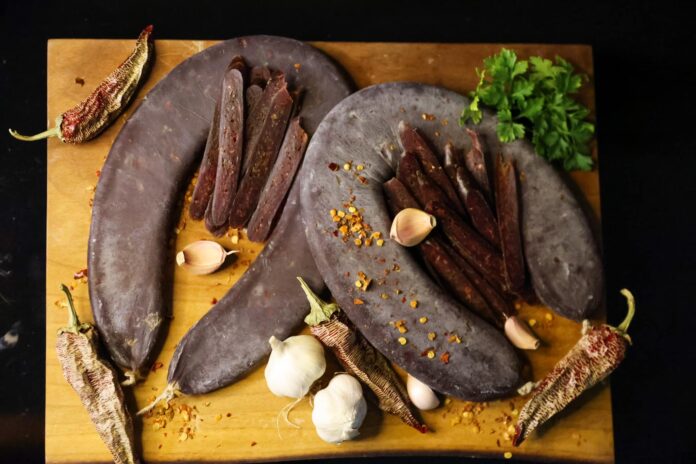
In the town of Pirot in southeastern Serbia, a traditional spicy sausage, naturally dried and shaped in the shape of a horseshoe, is considered a true delicacy, the Associated Press writes. The specialty is called “peglana kobasica” – “ironed sausage” – because it is flattened daily with a bottle, which gives it its thin and characteristic shape.
The recipe, passed down through generations, uses locally raised beef and goat meat, supplemented with garlic, hot peppers and spices picked from Stara Planina mountain, on the Bulgarian border. The sausages are naturally dried in attics or annexes, and the manual “ironing” process is repeated daily for about a month, until the product is completely dehydrated and ready to eat.
The tradition may be over a century old, with some locals even linking it to the Ottoman period, which ended in the Balkans in 1913. In the past, meat from older animals was used, with the sausages being hung on broomsticks in sheds or attics. Today, there are approximately 35–40 certified producers in the area, organized into an association that sets strict production rules.
In 2022, “peglana kobasica” from Pirot received an official certificate from the Serbian food safety authority for regional quality and controlled origin, which obliges producers to follow a clear specification, similar to protected geographical indication systems in the European Union. The leader of the producers’ association, Marjan Savic, describes the product as “top of the line” and claims it is one of the best sausages in the region.
However, the manufacturing process is laborious: the meat must be completely cleaned of fat and connective tissue – “probably the hardest part of the job,” explains Savic. Then the sausages are dried and manually pressed with the bottle, from the middle towards the ends, to homogenize the meat and speed up the dehydration. It all wraps up in time for the annual Pirot sausage fair held in January, which attracts thousands of visitors, including from neighboring Bulgaria.
One of the producers, Misa Rajic, learned the craft from his grandfather and continues to work at home on the outskirts of the city. In the attic of his home, the sausages are pressed with glass bottles and then hung to dry, between knives, medals and trophies that remind of the competitions won.
Despite its growing popularity, this gastronomic niche faces two major vulnerabilities: declining goat herds in the area and increasingly warm and wet winters, which experts link in part to climate change. For a product that depends on natural cold and dry air, climate change means greater risks of spoilage and additional costs to control drying conditions.
For the Romanian public, the story in Pirot reminds of the discussions about protecting traditional products – from Pleșcoi sausages to mountain cheeses – through IGP or DOP type certifications and through strict production rules. At the same time, it raises the same structural problem: how can rural communities preserve their small specialties in the face of depopulation, climate change and the pressure of food industrialization.
This article is an English translation and adaptation of the original Romanian article on Lista Scurtă. Read the Romanian version.

