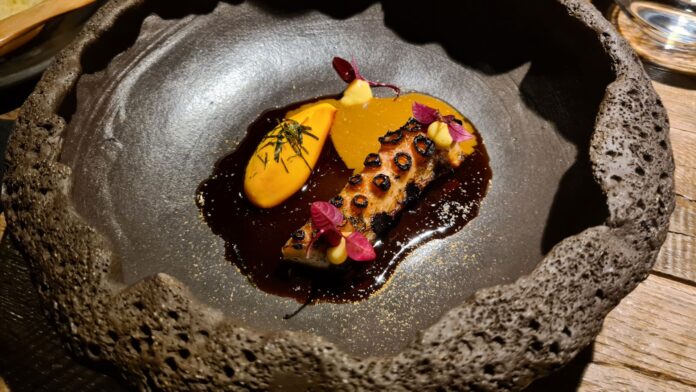
A dinner built around a chef’s memories, food cooked over wood fires in an Iancului house, Romanian ingredients paired with techniques and flavours from other cuisines: these five restaurants take sufficiently different approaches for your choice to begin with curiosity about a particular kind of meal. This selection focuses on what reaches the plate, who creates the menu and how you can spend the evening.
1. éto – cuisine of now
At éto, at 32 Strada Viitorului, Sorin Stoica builds menus around ideas connected to places and flavours he has encountered. Romanian cooking is the starting point for a personal interpretation in which fermentation, ageing and seasonality change how you recognise an ingredient. The old house and its contemporary interior, designed by architect Claudiu Ionescu, support the same intention: a meal worth setting time aside for.
The Hora menu is a good example, taking inspiration from communities that have influenced local food. Stoica’s interest in these culinary encounters provides a thread to follow from one dish to the next. Ask about the origins of the combinations; the sequence of plates then makes more sense than each one considered alone.
We would choose it for an evening when you are happy to follow the chef’s lead and discover familiar flavours in a different form. Service options may include tasting menus, à la carte or a seat at the Chef’s Table near the team. Choose the format that suits you when booking and mention any ingredients you cannot eat in advance.
2. AURA
AURA, at 20 Strada Aron Cotruș, is the restaurant of Bogdan Alexandrescu, known as Dexter. The menu reflects a chef trained in France who often returns to Romanian ingredients and flavours. Beef carpaccio with Horezu cheese and sour-cherry vinaigrette is a precise example: raw meat, aged cheese and fruit acidity each have a clear role.
The same freedom appears in clams with white wine, butter and lovage, or spaghetti with lemon, pistachios and burrata foam. For vegetable lovers, browned mushrooms with corn, Horezu cheese and salsa verde have their own place on the menu. An apple and rhubarb tart served with yoghurt and dill ice cream deserves attention for an ingredient you might expect elsewhere in the meal.
The à la carte format lets you build your own dinner, from two dishes to a longer sequence. It is a good choice if you enjoy new combinations while retaining control of the pace and how far you want to experiment.
3. Kané – New Romanian Cuisine
The restored villa on Strada Dianei gives Kané a distinctive setting, and Vlad Pădurescu’s kitchen offers reasons to return in another season. The restaurant now works with several formats: à la carte, set menus and tastings. That matters if you want to discover it without devoting the whole evening to a long succession of dishes.
The combinations explain the cooking better than a label. Black Sea whelks appear with roasted pepper cream, sea buckthorn and sea herbs; gnocchi are paired with urdă cheese, fig leaves and confit tomatoes. Another dish brings Iberian pork together with kale and a sauce inspired by sarmale. Romanian flavours remain recognisable even when the presentation changes.
Follow the ingredients that intrigue you and ask how they are prepared. For two diners, choosing different starters can give a broader picture of the cooking. Dishes change seasonally, so these examples indicate the restaurant’s style rather than a fixed menu.
4. soro|lume
At soro|lume, fire is an essential cooking tool. Mihai Iosif Toader and Melinda Teohari built the restaurant at 33 Strada Fluierului around techniques encountered across Romania: ovens, embers, smoking and traditional cooking vessels and equipment. The Iancului house and its courtyard ovens suit a kitchen where cooking time and the aroma of wood matter.
Dishes often begin with something familiar before changing the perspective. Balmoș, smoked fish or slow-roasted pork tell a different story about Romanian food from menus built around the same handful of staples. Toader’s research in villages is reflected in his interest in regional recipes and techniques passed on through practice.
Bring someone willing to try less familiar dishes. A short menu encourages you to read every option, and asking about an ingredient or cooking method may change your order. We particularly recommend it to anyone interested in discovering the variety of local food in a relaxed setting.
5. L’Atelier
A short walk from Cișmigiu, in the Epoque hotel at 17C Intrarea Aurora, L’Atelier offers the pace and service of a gastronomic restaurant. Flaviu Mureșan leads the kitchen. The menus draw on ingredients associated with the Carpathians, the Danube and Romania’s plains, alongside international products used in carefully considered combinations.
“Grădina Cișmigiu” pairs sea-bream tartare with rose, apple, horseradish and caviar. Turbot appears with Transylvanian truffles and seasonal mushrooms, while “Wagyu à la Cluj” brings beef together with cabbage, rice and sour cream. A vegetarian menu gives confit cabbage, pumpkin and urdă ravioli the same attention as meat and fish.
This is the choice we would consider for an anniversary or a dinner where wine plays an important role. Sommelier Luca Aurelian can arrange pairings with the dishes. Tasting menus are ordered for the whole table, so discuss the choice together before booking.

